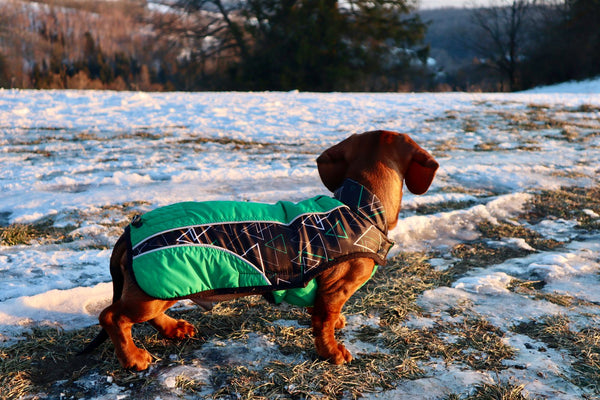
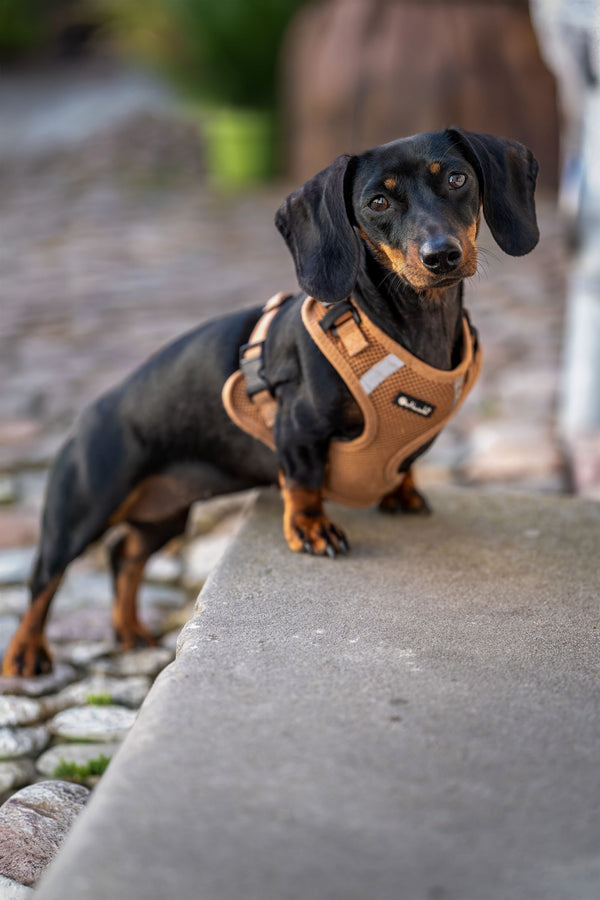
Your dachshund has stopped at the same patch of grass for the third time. On a sniff walk, that pause is part of the outing. A sniffari gives your dog time to investigate a suitable place while you keep the route safe and the lead manageable.
- Choose a quiet place where stopping does not block other people.
- Let your dog choose some of the pace and direction within safe limits.
- Keep ordinary exercise, toilet needs and rest in the wider routine.
What makes a sniff walk different?
An ordinary walk often has a destination and a steady pace. A sniff walk leaves time for exploring scent along a small, suitable route. You might cover less distance while spending longer beside a verge or tree. It does not require special scented products, a challenging trail or a new purchase.
Let your dog investigate without asking for a cue every few steps. You still decide which areas are safe and when it is time to move on. A sniffari is a shared outing, not unlimited access to whatever is on the ground.
Pick an easy place
Look for a quiet grassy edge or broad path with room to pause. Avoid discarded food, sharp litter, wildlife nests and plants you cannot identify. Stay within local access rules and keep away from crops or sensitive habitat. If a spot is busy, choose another one so your dog can explore without being crowded.
A dog who eats found objects needs closer supervision and an individual training plan. Do not let the idea of enrichment override that risk. For games you can control more closely, our indoor enrichment guide offers simpler setups.
Handle the lead without a tug-of-war
Use a well-fitted harness and a lead you can manage comfortably in the space. Allow slack where safe while keeping your dog clear of roads and other walkers. A long line needs suitable open ground and careful handling; it is awkward on a crowded pavement. Read our leash-length guide before changing equipment.
Give a gentle familiar cue when you need to leave a scent, then reward your dog for moving with you. Avoid jerking them away or making every stop a contest. If the lead stays tight throughout, work on the underlying loose-lead skills in an easier place.
Find the right balance for your dog
Try one small route and note what your dog enjoys. A relaxed outing might include pauses, normal movement and easy check-ins; frantic scanning or a stiff body suggests changing the setting. Stop before your dog becomes overtired, cold or overheated.
Sniffing is one form of enrichment, alongside play, training and choice. Dogs Trust's enrichment guide describes several options. There is no reliable formula that turns a certain number of sniffing minutes into a fixed number of exercise minutes. Use our exercise guide to think about the whole day.
Your quick checklist
| Record after the walk | Example note | Use it next time |
|---|---|---|
| Place | Quiet verge / busy path | Repeat the calmer setting |
| Comfort | Relaxed / hesitant / tired | Adjust route and duration |
| Lead handling | Slack / tangled / tight | Choose a more suitable space |
| Favourite stop | Grass edge / tree / open space | Allow time to explore safely |
Common questions
How long should a dachshund sniff walk last?
There is no fixed duration. Adjust to your dog's age, health, energy and the conditions, and finish while the outing is comfortable.
Can a sniffari replace every normal walk?
It can be part of the routine, but still consider appropriate physical activity, toilet opportunities and any veterinary guidance for your dog.
General information, not individual veterinary or behaviour advice. Adapt activities to your dog's health and comfort.
Photo: Patrick on Pexels, used under the Pexels License. Stock photograph; not a Doxie Gang product demonstration.