

Don't let the short legs fool you. Dachshunds were bred as working hunting dogs, and most have far more stamina than people expect. Regular exercise keeps them lean, strengthens the muscles that support their spine, and burns off the energy that otherwise goes into barking and digging.
| Dog | Daily activity (guide) |
|---|---|
| Miniature adult | About 30 to 45 minutes |
| Standard adult | About 45 to 60 minutes |
| Puppy | About 5 minutes of walking per month of age, up to twice a day |
| Senior | Shorter, gentler, more frequent walks |
Adult dachshunds
Splitting daily exercise into two or more walks usually works better than one long outing. Add play and sniffing time and you'll have a content doxie. Many fit dachshunds happily manage several kilometres. Build distance up gradually, and adjust for your dog's age, fitness and health.
Puppies
Puppies need lots of short bursts of play rather than long, structured walks. The "five minutes per month of age" rule is a rough guide rather than a hard rule, but it's a useful reminder not to overdo it while bones and joints are still developing. Free play, sniffing and training games all count on top.
Seniors
Older doxies still need daily movement to keep muscles strong and joints mobile, but they'll often prefer shorter, gentler walks. Let them set the pace and watch for stiffness afterwards.
Well-conditioned back and core muscles help support a dachshund's spine. Veterinary research has suggested dachshunds who get regular daily exercise may be at lower risk of IVDD. More in our IVDD prevention guide.
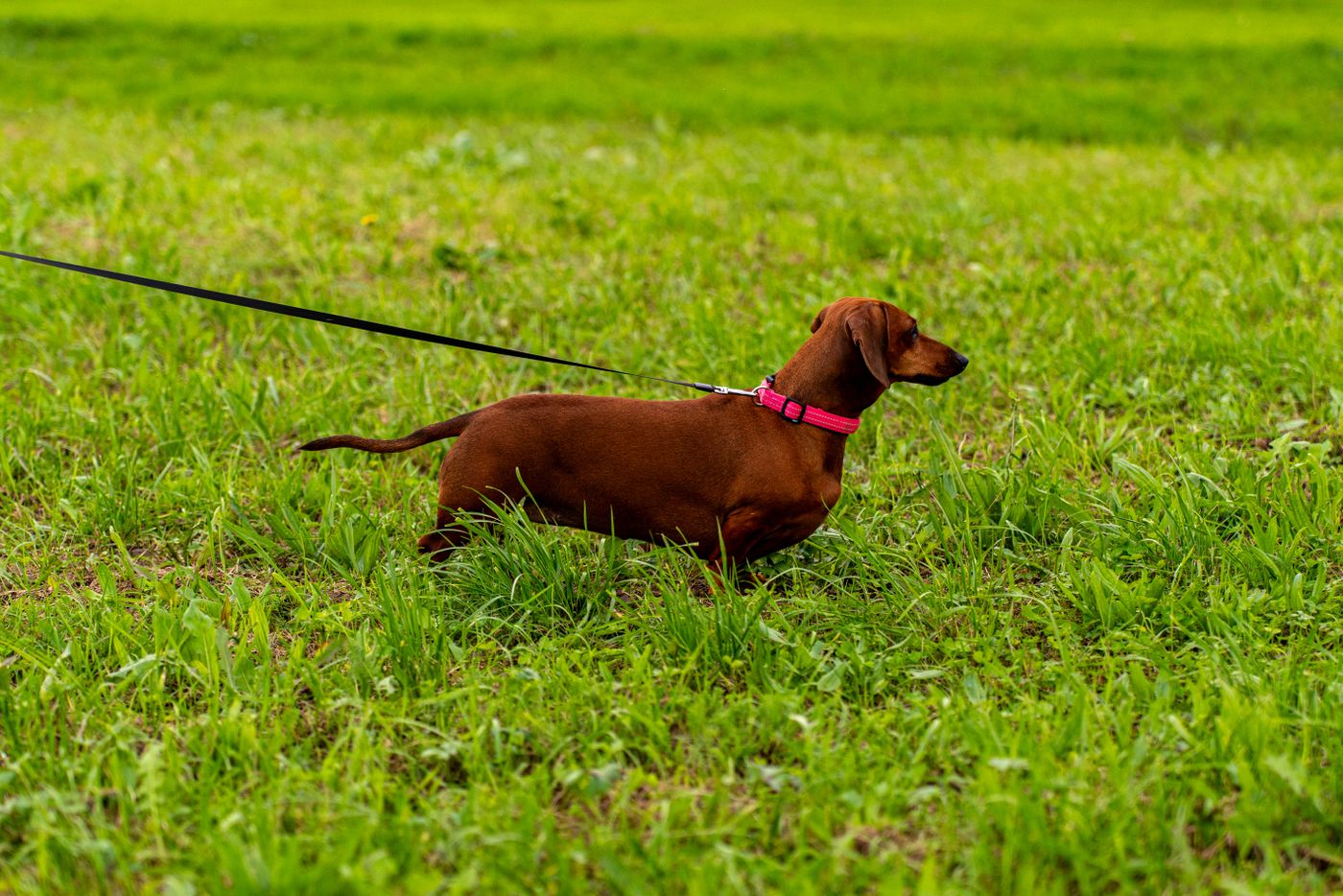
Best activities for dachshunds
- Walks on a harness. The foundation. See collar vs harness.
- Sniff walks. Let them lead with their nose. Scenting is mentally tiring and very satisfying for a hound.
- Scent games at home. Hide treats around a room or in a snuffle mat.
- Digging boxes. A sandpit or box of blankets with hidden toys.
- Swimming, with a dog life jacket and close supervision.
- Short training sessions. Five minutes of tricks works the brain as hard as a walk works the body.
Activities to limit
- Repeated jumping off furniture, in and out of cars, or over agility jumps
- Frequent stairs, especially going down
- Standing on hind legs for long periods
- Rough play with much bigger dogs
- Frisbee-style games with leaping and twisting
Too little, or too much?
Signs they need more: weight gain, destructive chewing, excessive barking, digging at the carpet, restless evenings.
Signs they've had enough: lagging behind, lying down and refusing to move, heavy panting, limping, or stiffness the next day. On hot days, read our hot weather guide.

The Doxie Gang Walk Set
Harness, lightweight 1.5 m leash and clip-on poop carrier, designed for the dachshund body.
Shop the walk setCommon questions
How far can a dachshund walk?
A fit adult can often walk several kilometres. Build up gradually and watch for tiredness. Miniatures and seniors will usually want less.
Can dachshunds go running?
Some fit adults enjoy an easy jog on soft ground, but they aren't built for long, fast runs. Avoid it with puppies and seniors.
Is a garden enough exercise?
Not usually. Walks give them new smells and mental stimulation that a familiar garden can't.
General guidance, not veterinary advice. Speak to your vet about the right exercise for your dog, especially after back problems. Cover photo by Oliver Wagenblatt on Pexels.
