A low-slung dachshund can bring half the park home on the chest of their harness. Cleaning it is straightforward, but the safest method depends on its fabric, padding and hardware. Start with the care label, then use this routine to separate ordinary mud from wear that needs replacing.
- Follow the harness manufacturer's care instructions before choosing a wash method.
- Remove grit gently, rinse out detergent and dry padding completely.
- Clean equipment still needs a fit and condition check before every walk.
Before you wash
Take the harness off your dog and photograph the strap positions if it is easy to lose your adjustments. Empty any attached pouch and remove accessories that have different care requirements. Check the manufacturer's label or product instructions: a machine-washable harness and one with leather or delicate trim need different treatment. If there are no clear instructions, ask the seller rather than assuming a hot wash is safe.
A gentle cleaning routine
Let loose mud dry enough to brush away without grinding it further into the fabric. Shake out grit and remove trapped hair, particularly around buckles and adjustment sliders. Where the care instructions permit hand washing, use cool or lukewarm water and a small amount of suitable mild detergent. Work gently through muddy areas instead of scrubbing aggressively at stitching or printed details.
Rinse thoroughly so that detergent does not remain against your dog's skin. Do not improvise with bleach, disinfectant, essential oils or strong fragrances. If the harness has contacted something hazardous, keep it away from your dog and ask your vet or the manufacturer what cleaning or replacement is appropriate.
Drying matters as much as washing
Press out water gently without wringing the straps. Air-dry in a ventilated spot unless the label specifies another method. Avoid a tumble dryer, radiator or direct high heat unless expressly permitted. The outside may feel dry while the chest padding still holds water, so check both sides and the thickest seams before putting it away.
A spare, correctly fitted harness can help you avoid walking in a damp one while the first dries. Damp equipment, trapped grit and a shifting fit can all make a walk uncomfortable. If you notice pink skin or licking behind the legs, see our harness rubbing checklist.
Save this post-wash inspection
Use the table below every time you clean your harness. Washing can reveal damage that dried mud hid. Retire equipment with a cracked clip, unreliable closure, torn strap or failing stitching; do not rely on a quick home repair for a load-bearing attachment.
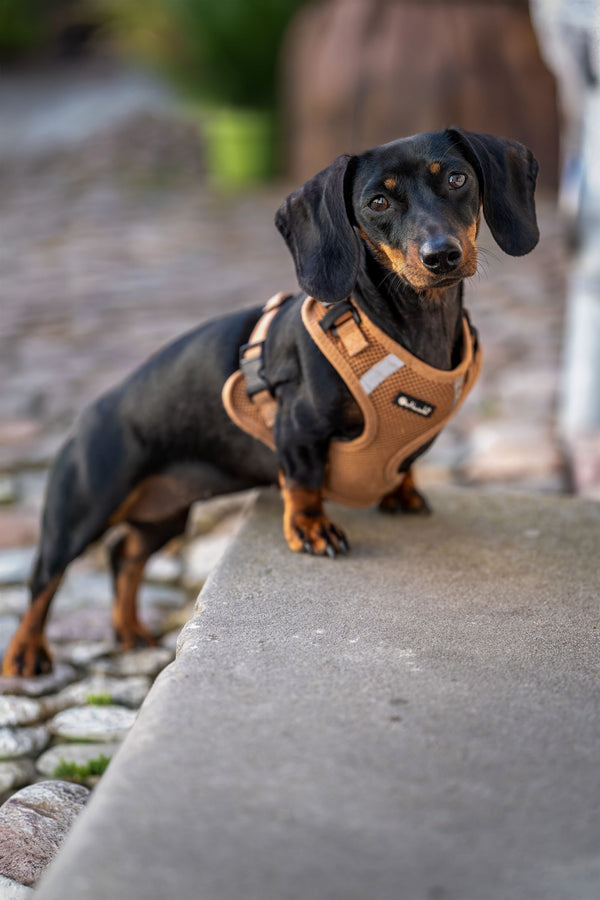
Once dry, refit the harness on a standing dog and watch a few steps indoors. Straps should lie flat and the front legs should move freely. Use our measurement guide if the fit has changed. The Doxie Gang harness is an everyday walking option; check its current care guidance before washing.
Your quick checklist
| Part | Check | Action |
|---|---|---|
| Buckles and clip | Closes securely; no cracks or grit | Clean or replace damaged equipment |
| Straps and stitching | No fraying, cuts or loose seams | Retire compromised equipment |
| Chest padding | Fully dry and free of detergent | Rinse again or allow more drying |
| Fit | Flat straps and comfortable movement | Adjust and recheck before leaving |
Common questions
How often should I wash a dog harness?
Clean it when dirty and follow the maker's instructions. A muddy walk may call for cleaning sooner than a dry pavement outing; there is no universal weekly schedule.
Can a dog harness go in the washing machine?
Only if its care instructions allow it. A mesh bag does not make unsuitable materials or hardware machine safe.
General information, not individual veterinary or behaviour advice. Adapt activities to your dog's health and comfort.
Photo: Peter Jochim on Pexels, used under the Pexels License. Stock photograph; not a Doxie Gang product demonstration.