If you've heard dachshunds are hard to house-train, you heard right, but it's absolutely doable. Doxies aren't less intelligent than other dogs. They're independent, stubborn, and not fond of going outside when it's cold or wet. The fix is a clear routine, lots of rewards and plenty of patience.
- Same spot, every time, and go out often.
- Reward immediately, outside, the moment they finish.
- Use a crate when you can't supervise.
- Never scold accidents. Clean with an enzyme cleaner.
Why dachshunds can be tricky
- Independence. They were bred to make their own decisions underground.
- Small bladders, especially as puppies.
- Weather aversion. Low to wet grass and cold ground, many doxies refuse to go out in the rain.
- Small accidents go unnoticed, which lets the habit form.
The routine, step by step
- Pick a toilet spot. Take your dog to the same place outside every time. The smell reminds them what they're there for.
- Go out often. First thing in the morning, last thing at night, after every meal, nap and play session, and every 1 to 2 hours for young puppies.
- Use a cue word. As they start to go, say a calm "go potty" or "be quick". Very handy on rainy nights.
- Reward immediately. Praise and treat right there, outside, the moment they finish. Not when you get back in.
- Supervise or crate. When you can't watch them, use a correctly sized crate or puppy pen. Never use it as punishment.
- Handle accidents calmly. If you catch them mid-accident, calmly take them outside. Otherwise just clean up. Scolding teaches them to hide when they need to go.
Puppies can often hold on for about as many hours as their age in months, plus one. Many doxie puppies need to go more often than that.
A sample puppy toilet schedule
| When | What to do |
|---|---|
| As soon as they wake | Straight outside to the toilet spot, before anything else |
| After meals | Out within 5 to 15 minutes |
| After naps and play | Out every time |
| Every 1 to 2 hours | Regular trips out during the day for young puppies |
| Before bed | A last trip out, then settle down |
| Overnight | Young puppies may need one quiet, boring trip out |
Crate training for toilet training
Dogs naturally avoid soiling where they sleep, which makes a crate one of the best toilet training tools. It needs to be big enough for your puppy to stand, turn around and lie down comfortably, but not so big that they can use one end as a toilet. A divider lets you adjust the space as they grow. Make the crate a lovely place with a soft bed and a chew, and never use it as punishment.
Reading the signs
Most dogs give warning signs before they go. Watch for sniffing the floor, circling, suddenly walking off, whining or heading to the door. The moment you see these, calmly take your dog outside to their spot.
Making rainy days easier
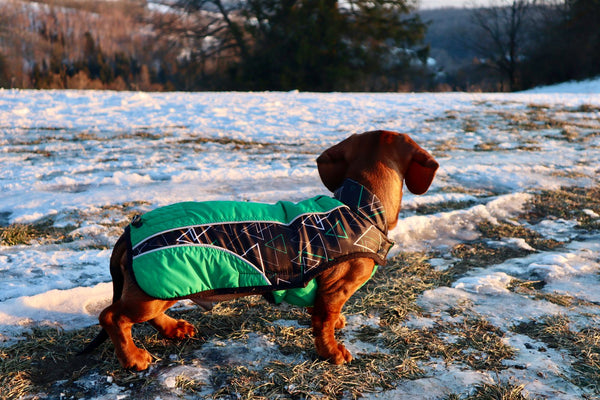
- A warm sweater or coat makes going out much less off-putting.
- Create a covered toilet area near the door if you can.
- Go out with them. A doxie left alone in the rain will just wait by the door.
Adult and rescue dachshunds
Treat a newly adopted adult like a puppy for the first few weeks, with frequent trips out and lots of rewards. If a previously house-trained dog starts having accidents, see your vet, as urinary infections and other medical issues are common causes.
Common setbacks, and what to do
- Regression around 4 to 6 months. It's common for puppies to seem to "forget" during adolescence or teething. Go back to basics with more frequent trips out.
- Accidents in the same spot. The smell draws them back. Clean with an enzyme cleaner, not ammonia-based products, which can smell like urine to a dog.
- Accidents when you're out. They may be left too long, or finding it hard to be alone. Shorten the time or arrange a mid-day break.
- Peeing when excited or greeting. This is often excitement or submissive urination rather than a toilet training issue. Keep greetings calm and low-key, and most puppies grow out of it.
- Marking. Some dogs, especially entire males, lift a leg on furniture. Speak to your vet about options and supervise closely.

Doxie Gang Poop Carrier
Clips onto your leash so bags are always on hand, and you never have to carry a full one for the rest of the walk.
Shop the carrierCommon questions
How long does it take to potty train a dachshund?
Many puppies are reliable by around 4 to 6 months, but some take longer. Consistency matters more than age.
Should I use puppy pads?
They can help in apartments or with very young puppies, but can slow down outdoor training. If you use them, move them gradually toward the door and then outside.
Why does my dachshund pee inside right after a walk?
They were probably too distracted on the walk. Give them a few quiet minutes in their toilet spot before heading in.
Why is my dachshund still having accidents at one year old?
Some dachshunds take longer, especially if the routine has been inconsistent. Go back to frequent, rewarded trips outside, and check with your vet to rule out a medical cause.
Should I use a bell on the door?
Many owners find it helpful. Ring the bell each time you take your dog out and reward them for nudging it. Just be ready for them to ring it when they fancy a sniff too.
General guidance. If your dog has sudden accidents or strains to urinate, contact your vet. Cover photo by Anil Sharma on Pexels.