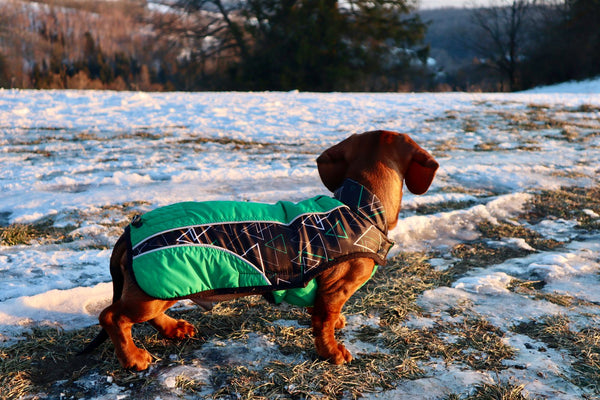
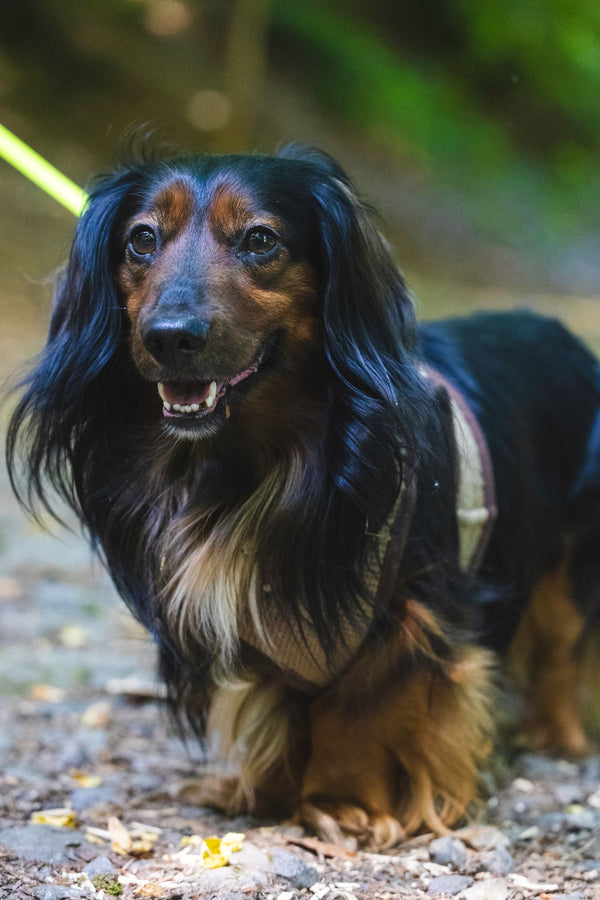
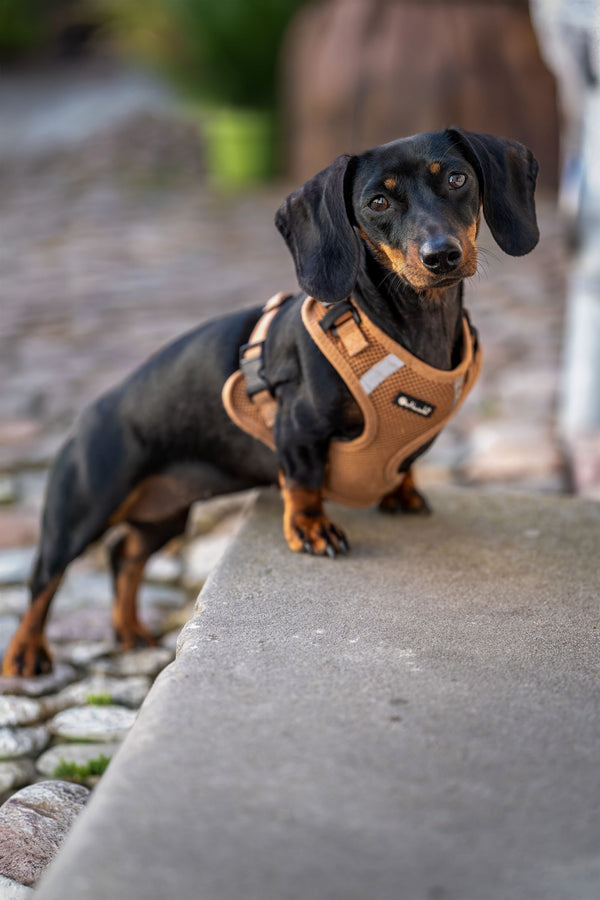
Congratulations, you're about to join the doxie gang. Dachshund puppies are clever, funny, stubborn and very, very cute. They also have a few breed-specific needs that are much easier to get right from day one than to fix later.
- Harness, light leash, ID tag and poop bags
- A low bed, a crate or pen, and soft blankets
- Stair gates, ramps and a puppy-proofed floor
- A vet check-up booked for the first week
The gear
For walks
- A dachshund-fit harness. A harness spreads pressure across the chest instead of the neck. Choose an adjustable one, as puppies grow fast. Our harness buyer's guide explains what to look for.
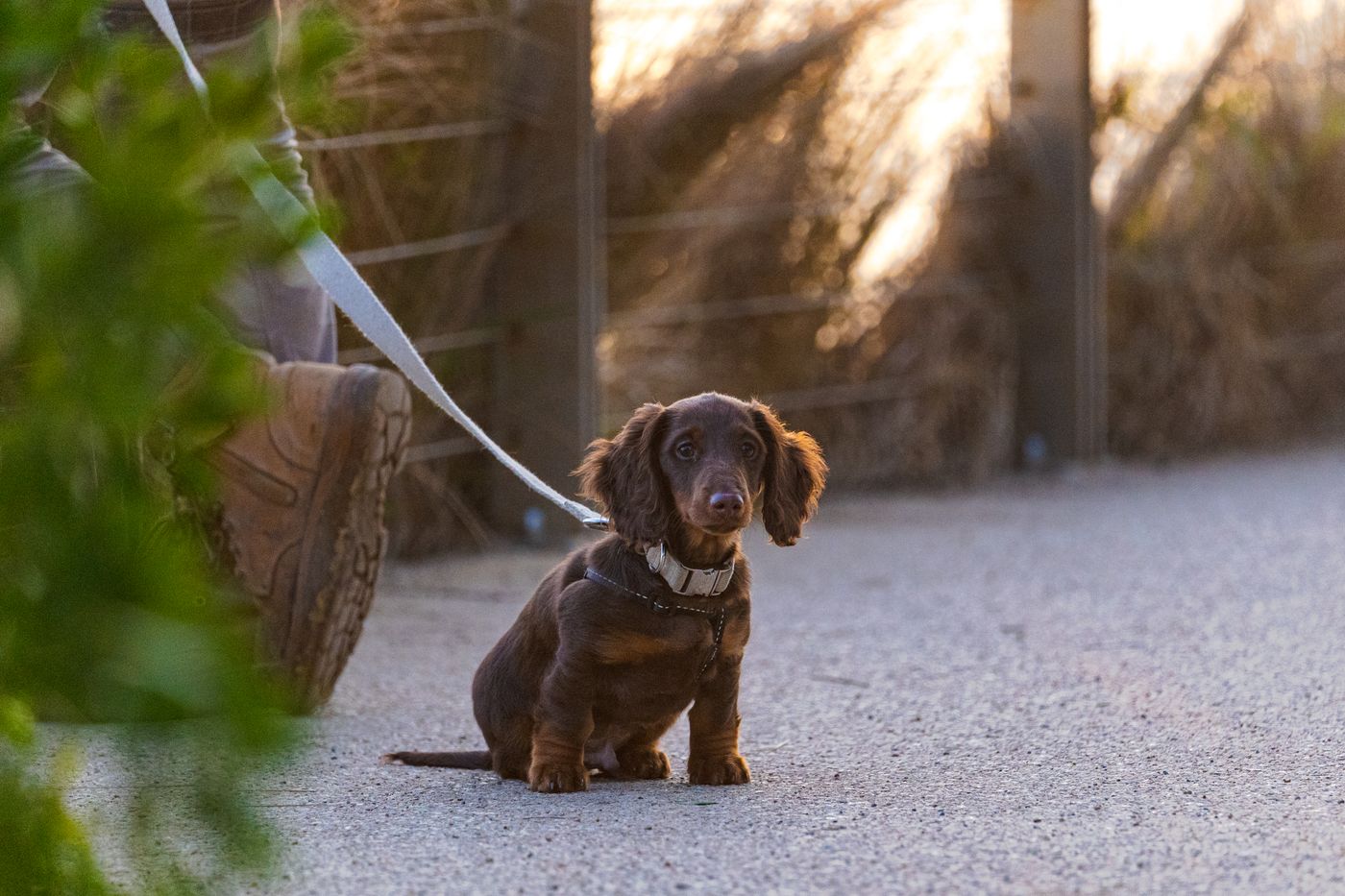
- A lightweight leash. Heavy clips and thick rope leashes are a lot of weight for a tiny puppy.
- A flat collar with an ID tag, for identification only, not for the leash. Check your local microchip and tag rules.
- Poop bags and a carrier. You'll use more than you think.
For home
- A low, cosy bed with raised sides for burrowing. See how to choose one.
- A crate or puppy pen for naps and toilet training.
- Soft, breathable blankets to dig into.
- Shallow, stable bowls suited to a short-legged dog.
- Puppy food, starting with whatever the breeder or shelter used.
- Durable chew toys, to save your shoes.
- Ramps or stair gates to stop jumping and stair-climbing.
- A sweater for chilly toilet trips. See do dachshunds need sweaters?
Puppy-proofing
- Move cables, shoes, socks and anything chewable off the floor.
- Secure bins. A dachshund nose will find them.
- Check garden fences for gaps and dig spots.
- Block stairs and high furniture from the start.
- Keep chocolate, grapes, raisins, onions and xylitol-sweetened products well out of reach.
The first 48 hours
Your puppy has just left everything they've ever known. The first couple of days are about helping them feel safe, not showing them the world.
- Keep it calm. Limit visitors and let your puppy explore one or two rooms at their own pace.
- Show them the toilet spot straight away and take them back there often, especially after sleeping, eating and playing.
- Stick to the same food the breeder or shelter used, to avoid an upset tummy. Change gradually later if you want to.
- Set up a cosy sleeping spot near you. Many puppies settle better with their crate or bed in the bedroom for the first few nights.
- Expect some crying. A warm (not hot) water bottle wrapped in a towel and something that smells of their littermates can help.
A sample daily routine
Puppies thrive on routine. Every home is different, but a typical day with a young dachshund puppy looks something like this:
| Time | What happens |
|---|---|
| Wake up | Straight outside to toilet, then breakfast |
| Morning | Short play and training session, then a nap in the crate or pen |
| Midday | Toilet break, lunch, gentle play, another nap |
| Afternoon | Socialisation: new sounds, surfaces or a short carried outing |
| Evening | Dinner, calm play, harness practice, a few minutes of training |
| Bedtime | Last toilet trip, then quiet time in their bed |
Young puppies often need a toilet break every hour or two during the day, and they need plenty of sleep, often 18 hours or more. An overtired puppy is a bitey puppy, so enforce those naps.
The first vet visit
Book a check-up within the first week or so. Your vet will check your puppy's health, set up vaccinations, worming and flea treatment, check the microchip and talk about desexing. Ask about healthy weight and back care for dachshunds while you're there.
Habits to start on day one
- Lift them properly. One hand under the chest, one under the back end, spine level. Teach everyone, especially kids. Full guide: how to pick up a dachshund.
- No jumping off furniture. Use ramps, or lift them down. See IVDD prevention.
- Keep them lean. Measure food and count treats. See the weight guide.
- Start toilet training straight away. Our potty training guide has the full routine.
- Socialise gently with new people, sounds, surfaces and (once vaccinated) friendly dogs.
- Introduce the harness early. Reward them for putting their head through, and let them wear it indoors for short spells. Use the size guide to get the fit right.
Food and feeding
Young puppies usually eat three or four small meals a day, dropping to two as they grow. Choose a complete puppy food suited to small breeds and follow the feeding guide on the pack, adjusting for your puppy's body shape. Dachshunds love food and are prone to putting on weight, so count training treats as part of the daily allowance. Your vet can advise on the right amount at each check-up.
Training basics that make life easier
Dachshunds are smart but independent, which means training works best when it's short, fun and full of rewards. Good first skills to teach:
- Their name and looking at you when you say it
- Sit and down, which are handy for calm greetings
- Come, practised indoors and in the garden long before you'd ever need it outside
- Crate time, so resting alone feels normal (this helps prevent separation anxiety later)
- Handling of paws, ears and mouth, so nail trims and vet visits are easier
Puppy classes run by a positive-reinforcement trainer are a great way to practise around other dogs once your vet says it's safe.

The Doxie Gang Walk Set
Harness, matching leash and clip-on poop carrier, designed for the dachshund shape. Everything for those first walks.
Shop the walk setCommon questions
When can my dachshund puppy go for walks?
Usually once your vet confirms their vaccinations are complete. Until then, carry them outside to see the world and practise the harness at home.
How big will my dachshund puppy get?
Under the AKC standard, miniatures are 11 lb (about 5 kg) and under as adults, and standards 16 to 32 lb (about 7 to 14.5 kg). The parents are the best guide.
Are dachshunds good for first-time owners?
They can be, if you're ready for a clever, independent dog that needs consistent training and a little extra care for their back.
How much should a dachshund puppy sleep?
A lot. Young puppies often sleep 18 hours a day or more. Build nap times into their routine and give them a quiet place to rest.
How often does a dachshund puppy need to go to the toilet?
Very often at first: after waking, eating, drinking and playing, and every hour or two in between. Our potty training guide has a full routine.
What size harness does a dachshund puppy need?
Usually XS to start, but measure the neck and chest and check our size guide. Re-measure every month while they grow.
General guidance, not veterinary advice. Your vet is the best source of advice for your puppy. Cover photo by Vinícius Cezário on Pexels.