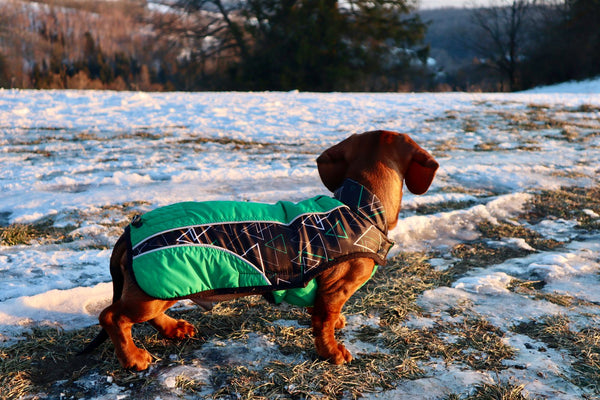
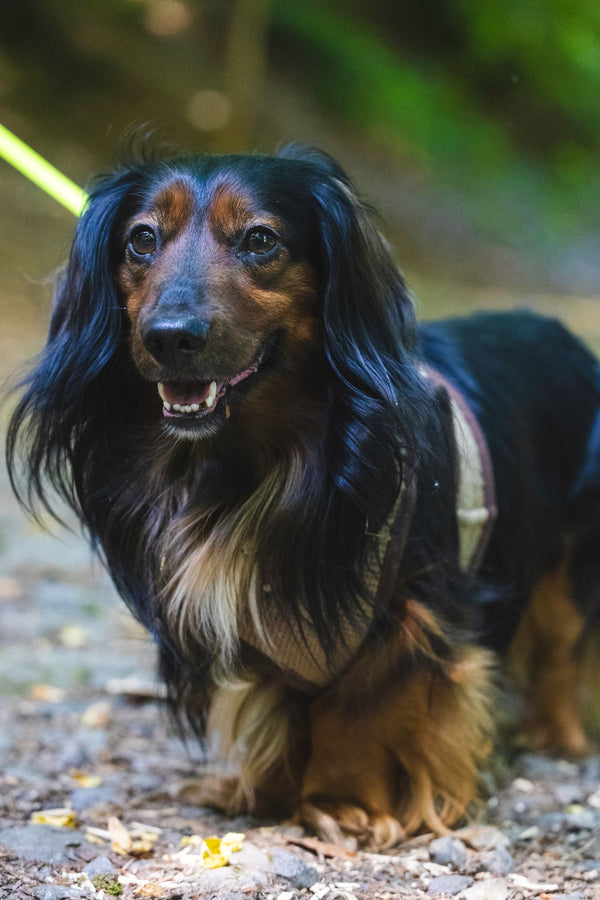
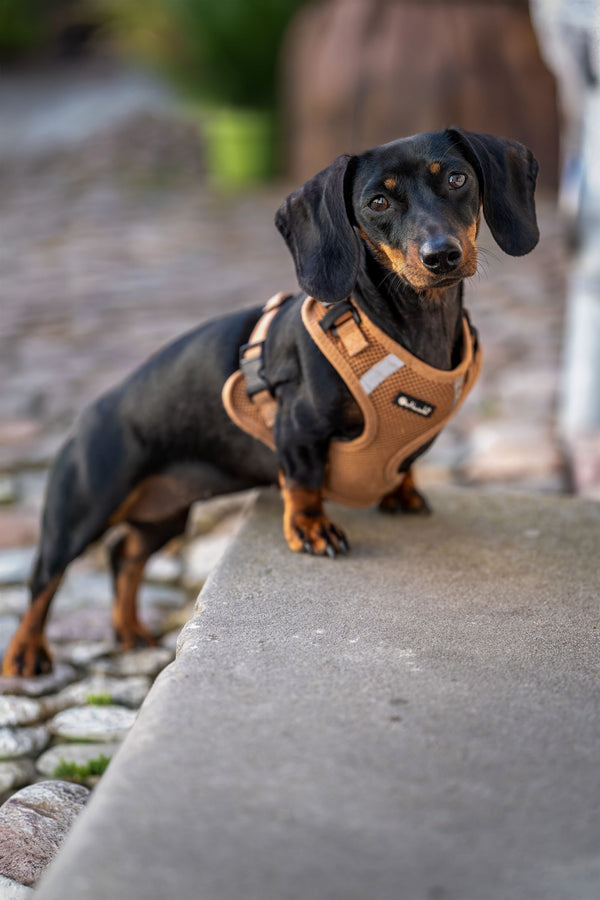
Autumn is a dachshund's favourite season for sniffing and their least favourite for getting cold and wet. It's also when the fireworks start, the evenings get dark, and the garden fills with things a doxie shouldn't eat. Here's a checklist to get your long one ready.
- Dig out (or buy) the layers, and check they still fit.
- Set up the fireworks den and start sound training now.
- Get visible for dark walks.
- Move the bed away from draughts and cold floors.
- Learn the autumn hazards: acorns, conkers, fungi, antifreeze.
- Keep parasite prevention going. Fleas don't stop for autumn.
1. Layers: check the fit
Last year's sweater may not fit this year's dog. Dachshunds change shape with age and weight, and puppies grow out of everything. Measure the chest, neck and back length (our clothes size guide shows how) and check anything that's tight across the chest, short in the back or rubbing in the armpits.
For most autumn days a light layer is enough: a knit sweater, or a fleece-lined vest that goes on in seconds for the quick morning potter. Save the waterproof coat for proper rain. Keep a spare on rotation so there's always a dry one.

Doxie Gang Fleece-Lined Vest
A quilted vest with a plush fleece lining and snap buttons along the back. Four floral colours, sizes S to XXL.
See the vest2. Fireworks: start now, not on the night
Bonfire Night, Diwali and New Year all fall between now and January, and the odd garden display starts even earlier. If your dachshund struggled last year, the time to act is weeks ahead: set up a den they already love, play firework sounds quietly during meals and build up slowly, and introduce any calming wrap or snood on calm days so it's familiar. Talk to your vet now if the fear is severe. Our full guide: dachshunds and fireworks.
3. Dark walks: be seen
A dachshund is below most drivers' and cyclists' eyeline at the best of times, and in the dark they vanish. Add a reflective or light-up collar tag, clip a small LED light to the harness, and wear something reflective yourself. Walk on the pavement side away from the road, and keep them on the lead near traffic, where a sudden sniff can take them off the kerb. See our guide to calm lead walking if they pull.
4. Wet weather routine
- Towel by the door. Dry the belly, chest, legs and paws every time, and check between the toes for mud and grit.
- Trim paw fur on long-haired doxies so mud doesn't ball up.
- Don't leave them damp. A wet dachshund in a cool house gets cold quickly. Dry thoroughly, then a warm bed.
- Wet-weather walks can be shorter and topped up with indoor games. Many dachshunds flatly refuse rain anyway. A covered toilet spot near the door helps on those days.
5. Bed and sleeping spot
When the heating comes on, hallways and utility rooms get colder at night while living rooms get warmer. Move the bed off tiles and laminate, away from external doors and draughts, and add a blanket to burrow into. A den-style bed with raised sides holds body heat far better than a flat mat. More in the best bed for a dachshund.
6. Autumn hazards for a low, nosy dog
A dachshund's nose is at exactly the height of everything autumn drops on the ground. Watch for:
- Acorns and conkers. Both can cause stomach upsets or worse, and conkers are a choking and blockage risk for a small dog.
- Wild mushrooms and fungi. Some are seriously toxic. Steer clear of anything growing in damp leaf litter, and call your vet if your dog eats one.
- Fallen fruit. Rotting apples and plums ferment, and the stones are a blockage risk.
- Grass seeds and burrs. Still around in early autumn. Check paws, ears and armpits after walks.
- Antifreeze. Sweet-tasting and highly toxic. Keep it locked away and clean up any spills on the drive.
- Rat poison. Used more as rodents move indoors. Keep bait well out of reach.
- Leaf piles. Fun to dig in, but they hide sticks, mould and the occasional hedgehog.
Call your vet or an animal poison line straight away, even if they seem fine. Note what it was and roughly how much, and don't try to make them vomit unless a vet tells you to.
7. Parasites don't stop for autumn
Ticks are active well into autumn in long grass and leaf litter, and once the heating comes on, fleas carry on breeding indoors all winter. Keep flea and tick prevention going year-round, check your dog after walks in woodland, and wash bedding regularly.
8. Joints, weight and the cold
Older dachshunds often stiffen up as the weather cools. A warm bed, shorter and more frequent walks, a ramp for the sofa and a vet check if they seem sore all help. Autumn is also a good time to check body condition: fewer walks and more treats over winter is how a lot of doxies gain weight, and extra weight loads a long spine. Our weight guide shows how to check at home.
9. The fun part
Crisp, dry autumn days are the best walking weather a dachshund gets all year. Long sniffy walks in the woods, a plaid bandana for the photos, and a den to burrow into afterwards. That's what the season is for.

Doxie Gang Plaid Bandana
Soft cotton plaid with frayed tassel edges, in 16 colours from rust and mustard to festive red. Ties on over the collar or harness.
See the bandanaCommon questions
When should my dachshund start wearing a sweater?
Once mornings drop below about 10°C (50°F), most doxies appreciate a layer, and below 4°C (40°F) they need one. Smooth coats, puppies and seniors feel it first.
Can dachshunds eat acorns?
No. Acorns contain tannins that can cause vomiting, diarrhoea and in larger amounts kidney problems, and they're a choking risk for a small dog. Call your vet if yours eats some.
Do I still need flea treatment in autumn and winter?
Yes. Central heating keeps fleas breeding indoors all year, and ticks stay active in mild weather. Keep prevention going.
General guidance, not veterinary advice. If your dog eats something toxic, contact your vet immediately.