Dachshunds often live into their mid-teens, and plenty stay bossy, curious and food-motivated the whole way. But somewhere around eight to ten, things start to change: a slower walk, a longer nap, a little more grey on the muzzle. A few small adjustments to their bed, routine and home make a big difference to how comfortable those years are.
- Most dachshunds count as senior from around 8 to 10 years old.
- Switch to vet checks every six months. Many problems are easier to manage when caught early.
- Keep them lean. Extra weight is the biggest avoidable strain on an older back and joints.
- Shorter, more frequent walks, a supportive warm bed, and ramps instead of jumps.
- Changes in drinking, appetite, toileting, wobbliness or behaviour are worth a vet visit.
When is a dachshund a senior?
Small breeds age more slowly than large ones, so most vets consider a dachshund senior from around 8 to 10 years. Miniatures often stay sprightly a little longer than standards. There's no switch that flips on a birthday, though. Watch the dog, not the calendar.
Changes to expect
- Greying around the muzzle and eyes
- More sleep, and a slower start in the mornings
- Less stamina on walks
- Stiffness after rest, especially in cold weather
- Cloudy eyes (often harmless, but get them checked)
- Some hearing loss, so they may not hear you come in
- Feeling the cold more
Some of these are just age. Others, like stiffness or a reluctance to use stairs, can be pain that's treatable. Don't assume "he's just old" without asking your vet.
Vet care
Move to a check-up every six months. Ask about blood and urine tests, which can pick up kidney, liver and thyroid problems before symptoms show. Dental disease is very common in small dogs and painful, so keep up with tooth brushing and dental checks. Ask too about pain relief and joint support if your dog is stiff. Our lifespan and health guide covers the conditions to know about.
Weight and diet
Older dogs burn less energy, so the same food can lead to steady weight gain. On a dachshund, every extra half kilo loads the spine. You should be able to feel the ribs easily and see a waist from above. If you can't, cut back, swap some treats for vegetables, and ask your vet about a senior or weight-control food. Some older dogs go the other way and lose weight, which also needs a vet check. Our weight guide shows what a healthy shape looks like.
Exercise
Keep walking. Gentle, regular movement keeps muscles strong, and strong muscles support the back. Just adjust the shape of it:
- Two or three shorter walks rather than one long one.
- Let them sniff. A slow, sniffy walk is tiring in a good way.
- Flat, soft ground is kinder than steep hills and steps.
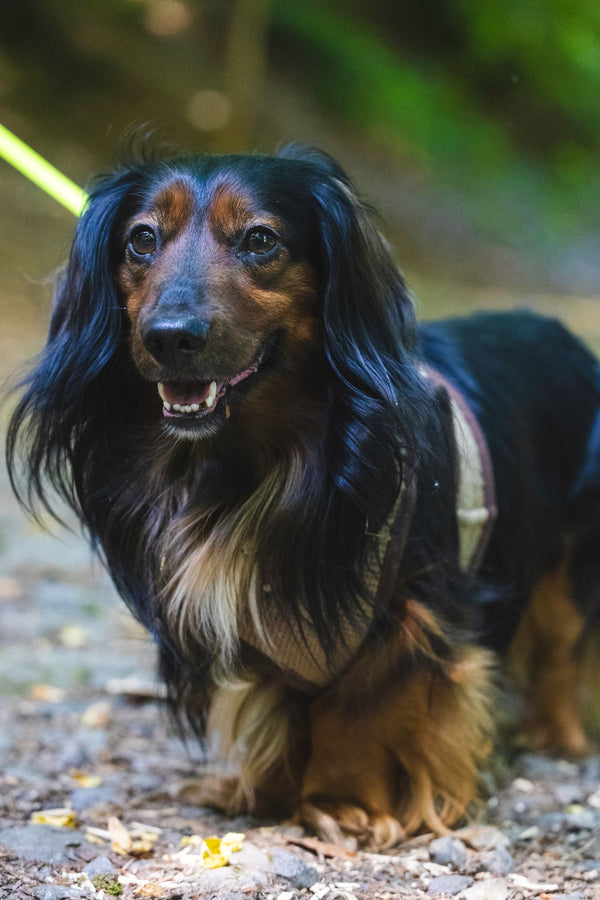
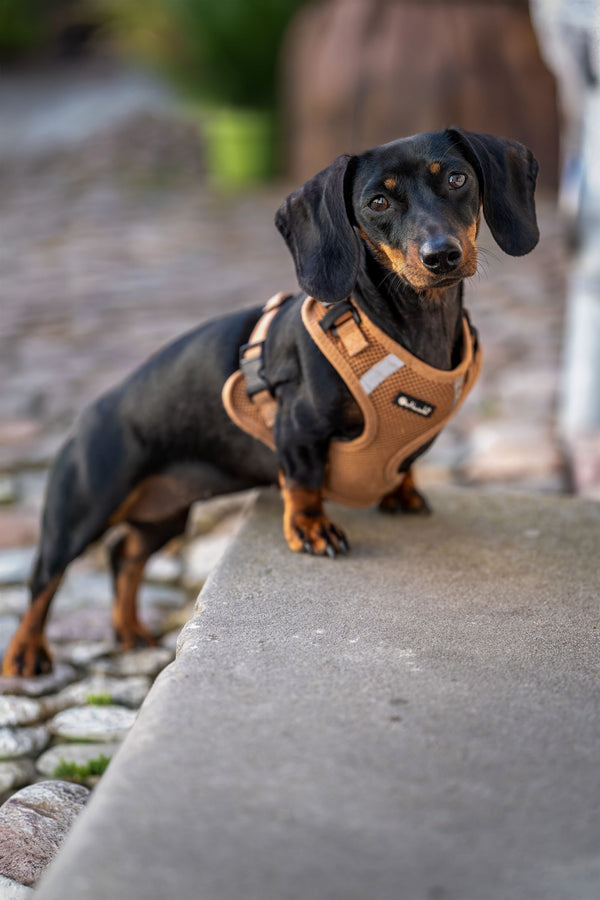
- Use a harness, not a collar, to keep pressure off the neck.
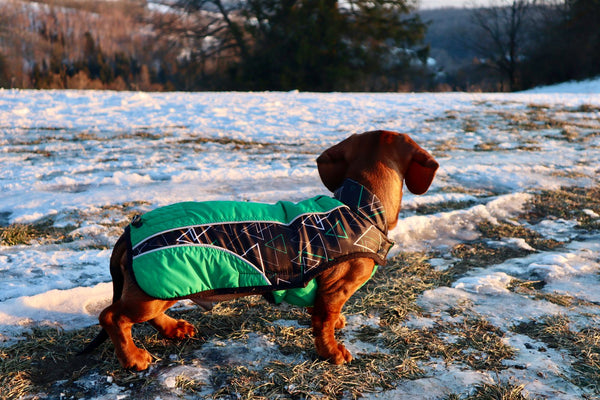
- Add a layer in cold weather. Cold muscles and joints stiffen up.

Doxie Gang Fleece-Lined Vest
Snap buttons along the back mean no pulling over the head or lifting stiff legs. Quilted outer, fleece lining, sizes S to XXL.
See the vestComfort at home
- A supportive, warm bed. Low to the floor, out of draughts, with enough cushioning that hips and shoulders don't press on the ground.
- Ramps and steps. Jumping on and off furniture is hard on any dachshund back and harder on an old one. Block stairs with a gate.
- Rugs on slippery floors. Older dogs lose grip on tiles and wooden floors. A few runners make a big difference.
- Easy-reach bowls and water on each floor of the house.
- More toilet breaks. Senior bladders hold less. Don't scold accidents; mention them to your vet.
- Gentle handling. Support the chest and rear when you lift them, every time. See how to pick up a dachshund.

Doxie Gang Paw Bed
Floor level, so there's no climbing in, with a cushioned base and raised sides that hold warmth. Machine washable.
See the Paw BedKeeping their mind busy
Dachshunds are clever, and a bored brain ages faster. Snuffle mats, scatter-feeding in the garden, simple new tricks and short sniff walks somewhere new keep them engaged without strain. Some older dogs develop canine cognitive dysfunction: confusion, pacing at night, getting stuck in corners, forgetting house training. If you notice these, talk to your vet, as there are treatments that help.
Signs to call the vet
Wobbliness, dragging back legs, crying when touched or a hunched back (possible IVDD, an emergency). Also drinking or weeing much more, sudden weight loss or gain, lumps, bad breath with drooling, coughing, fainting, or a big change in behaviour or appetite.
Common questions
How long do dachshunds live?
Typically 12 to 16 years, and many live longer. Staying lean, protecting the back and keeping up with dental and vet care all help.
Do senior dachshunds need less exercise?
They need different exercise, not none. Shorter, gentler, more frequent walks keep muscles and joints working and help with weight.
Should I feed my older dachshund senior food?
It can help, but it isn't automatic. The goal is a healthy weight and good condition. Ask your vet, especially if your dog has kidney, dental or weight issues.
Why is my old dachshund shaking?
It can be cold, pain, anxiety or nausea. Warm them up first. If it continues, or comes with stiffness or reluctance to move, see your vet, as back pain often shows up as trembling.
General guidance, not veterinary advice. Every older dog is different, so talk to your vet about your dachshund's care.